
Can VR increase people’s awareness of animal protection?

A while ago, the death of the last male white rhinoceros “Sudan” shook Internet users. Sudan’s death also means that white rhinoceros— the beautiful species— has entered the countdown to extinction.

With the increase of human activities since the 20th century, animals’ living space has been continuously compressed, pushing many species onto the verge of extinction. Globally, more and more national organizations and private organizations have tried their best to utilize various cutting-edge technologies, including virtual reality, to enhance people’s awareness of animal protection.

The Virtual Reality charity movie “Panda Love: The Secret Lives of Pandas” will be released soon. The film was jointly created by Conservation International, Chengdu Giant Panda Breeding Research Base, and the famous photographer Ami Vitale. The famous actor Wei Tang served as the Chinese commentator.Giant Pandas

The film is another public welfare documentary released by Conservation International after the traditional public welfare documentary “Below the Canopy.” It aims to make the audience vividly experience the living conditions of giant pandas through the strong sense of immersion brought about by VR videos. At the same time, it also demonstrates China’s achievements in giant panda protection.

As VR is a relatively novel approach, animal protection organizations and directors are still exploring the methods and techniques of VR documentary filming. Can VR improve the shortcomings of traditional documentaries? What are the problems still faced by VR documentaries? In some of the more representative cases in the past, we can already see some of the answers.

Compared with traditional documentaries, VR documentaries can break through the limitations of the picture frame, allowing the audience to be closer to nature, creating a feeling of intimate contact with animals.

When viewing a traditional documentary, viewers and the world depicted in the film are completely separated by a screen. Thus, they are merely viewing the world depicted in the film as outsiders. When watching VR documentaries, on the other hand, viewers are isolated from the outside world. Fully immersed in the environment inside the documentary, they now perceive the film world as insiders.

For example, when we see the scene of animal slaughter in a traditional video, although the audience generally feels some discomfort, they are still experiencing the event from a third-person perspective. In contrast, in the VR documentary “I, Chicken” produced by PETA, the viewer see the entire slaughter process from a first-person perspective and experience the event just as a chicken would.chicken2.jpg
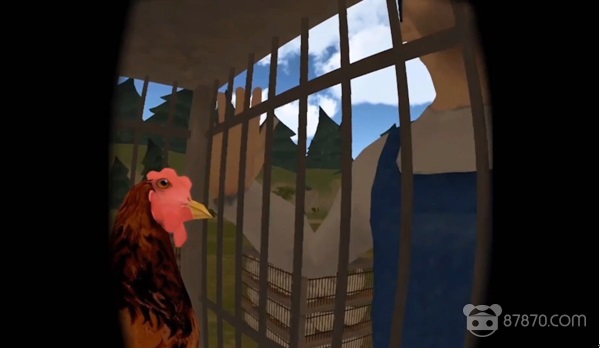
At the beginning of the documentary, the viewer (a chicken) leisurely roam on pasture. Soon, however, the viewer is unfortunately selected and trapped inside a small cage to be sent to a slaughterhouse.

When the cage is placed on the conveyor belt to the slaughter machine, viewers will feel the rapid heartbeats of and fear experienced by the chicken.

This is the significance of VR technology for filming animal protection-related documentaries — viewers are immersed in the animal’s living environment, and witness animal cruelty from an animal’s perspective. This is what VR’s strong sense of immersion brings to the audience. Sam Simon, the producer of the documentary and of The Simpsons, said in an interview that he hopes to awaken humankind’s empathy for animals through VR.Chicken 3.jpg
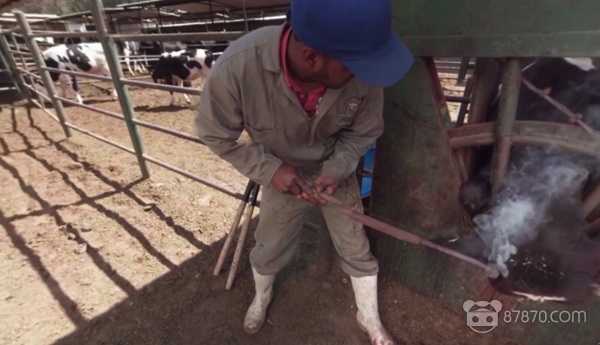
Despite these advantages, VR faces many challenges. To begin with, the production and promotion costs of VR documentaries are very high, for the production equipment is expensive, and very few technicians specialize in VR technology. Some VR films cost as high as millions of dollars to produce. Additionally, VR gives viewers too much room for interpretation, which makes it hard for the directors to effectively deliver their message.

All in all, nonetheless, animal protection-focused VR documentaries provide the audience a more realistic experience and can effectively promote animal protection. We look forward to seeing more people being moved and impacted by VR documentaries to pay more attention to animal protection.

Information and photos from 87870.com: http://www.87870.com/news/1804/31688.html

Translated by Sherry Yao, edited by Riley @ Animal Dialogue
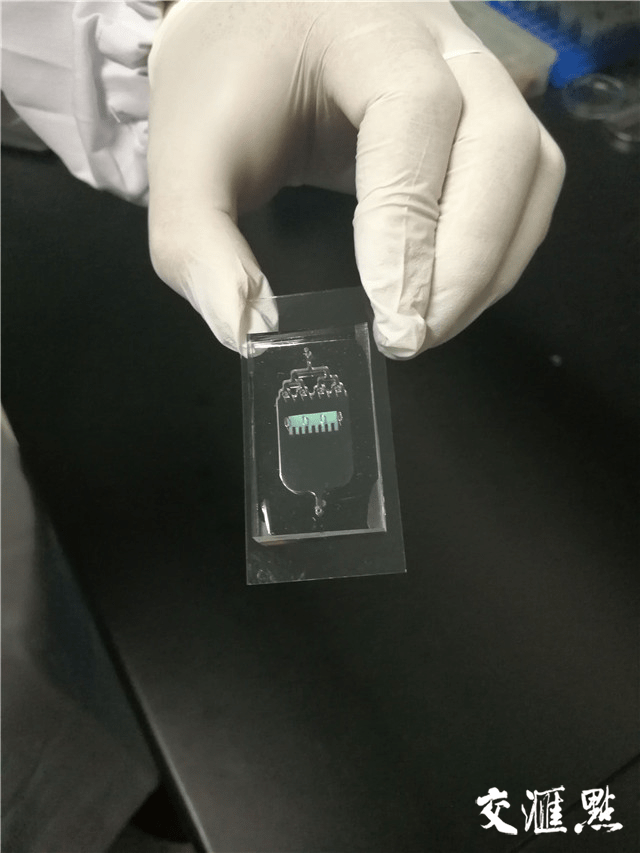
Experts from Southeast University have developed a “heart chip” that eliminates animal experimentation and clinical trials

Experts from Southeast University have developed a “heart chip” that eliminates the necessity for animal experimentation and clinical trials, and greatly reduces new drug development costs.

News from Southeast University on April 2nd: Professor Yuanjin Zhao, a researcher from Southwest University’s National Key Laboratory of Bioelectronics, has made important progress devising the “organ chip.” For the first time in the world, a color-changing “heart chip” has been developed. The change of color monitors the heart’s response to different drugs, thereby eliminating the necessity for animal and clinical trials. The “heart chip” provides a brand new platform for drug screening and R&D, which can greatly reduce the cost of new drug development.

“Organ chip” refers to building micro-organs bionically on micro-fluidic chips to replace living organisms for drug evaluation and biological research. It is one of the hottest new tools in biological research. As an important development trend in the construction of future evaluation systems for new drugs, “organ microchips” are of great strategic importance in supporting the development of innovative drug research and translational medicine in China.

The heart is the body’s most important organ. The construction of a “heart chip” with cardiac cell sensing is an important part of the development of “organ microchips.” Professor Yuanjin Zhao’s team at Southeast University was inspired by the regulation of chameleon cells’ structural colors. As a result, they pioneered the construction of “heart chips” with structural color sensing.

heart chip prof
Professor Yuanjin Zhao of Southeast University is explaining the heart chip.

Researchers combine gels with special optical structures with living cardiomyocytes. After the cells are fixed and grown on a jelly-like hydrogel surface, their contraction and relaxation can drive the gel film to undergo shape changes. As the arrangement of crystals inside the gel changes, the interference effect between the reflected light changes. Therefore, the beating state of cardiomyocytes can be directly represented by different colors. Subsequently, the heart’s reaction can be monitored by color changes in the chip, thus constructing a “heart chip” that can visualize micro-physiological function.

It is known that the “organ chips” developed by top international research institutions include lung, intestine, and kidney chips. The color-changing “heart chip” developed by Professor Zhao’s research team is unprecedented. It possesses unique advantages in the evaluation of new myocardial-related drugs and disease research. It is faster, more economical, and less invasive than conventional clinical trials. It can significantly reduce the cost of research and the development of new drugs. Moreover, it represents a breakthrough in China’s development of key technological platforms for innovative drug research. It has been expected to accelerate China’s pace as a country strong in pharmaceutical science and technology.

The results of this study, titled “Living Structural Color Materials,” were published in Science on March 29th. This was the first time for Chinese scholars to complete a paper independently in the journal.

Information and photos obtained from news.xhby.net

Translated by Sherry Yao, edited by Riley Peng @ Animal Dialogue

Chinese citizens prayed for extinct wildlife on the Qingming Festival

Chinese citizens prayed for extinct wildlife on the Qingming Festival, a Chinese traditional festival for respecting the dead. Also known as Tomb-Sweeping Day, the Festival usually falls on April 4th or 5th.

In Guangzhou, some citizens visited the Graveyard For Extinction in Yingzhou Ecological Park. Rows of grey cement tombstones fall backward like dominoes, each carved with the name of an extinct species and the time of its extinction.Pictures

There is another graveyard for extinction in Beijing Milu Yuan (Park for Elks), built in 1999. Every tombstone is carved with an animal’s name, emblazoning its extinction in recent centuries. This special graveyard was designed to tell people that the extinction of a species would bring about the tragic extinction of 30 more species.

Info and photos from Chinanews.com, Sina News, and Sina Blog

Written by Victor Du, edited by Riley Peng @Animal Dialogue

Circuses forced to a dead end? A number of circuses jointly accused animal protection organizations

Recently, the “Rescue Performing Animal Project Proposition,” authored jointly by numerous circus groups, accused and questioned the Project. According to the proposition, the Rescue Performing Animal Project opposes animal domestication under the name of charity, which threatens the livelihood of circuses. The list attached to the proposition revealed that 238 circus groups participated in this condemnation.

Chunmei Hu, Head of the Rescue Performing Animal Project, told Red Star News that in 2016 the Project detected 19 problematic performances after 35 surveillance executions. Some of these were handled by management departments, while others are expelled or rectified.

The initiator of the proposition, Jinsheng Yu, Head of the Hebei Qunyi Circus, said: “We feed the animals well and treat them as we would treat babies. The volunteers of the Rescue Performing Animal Project are too extreme. They accuse us of being abusive if animals are in the cages, and consider setting up tents for performances illegal.”

Yu claimed that no explicit ban on circus performances exists. Thus, the Rescue Performing Animal Project doesn’t have any legitimate justifications for inciting volunteers to repeatedly obstruct performances. Yu pointed out that out of the many circuses in China, although some don’t meet the requirements, most do.2

Zeying Yu, Deputy Secretary-General of the China Zoo Association, believes that animal protection organizations oppose circus animal performances mainly because the survival status and “welfare” of wild animals during mobile performances are difficult to guarantee. “The living conditions of zoos are better than those of circuses, though we still often receive complaints from animal protection organizations.”

Yu acknowledges that she supports the animal protection organizations in supervising the zoo, but opposes the information fraud, inaccuracy, and faulty generalizations in their complaints.

Regarding the news that many zoos and circuses have severed their partnerships in recent years, Yu indicated that the zoo industry is not “blocking” the circus industry. The two industries simply disagree on the treatment of animals. She thinks that circuses have reached a turning point of life and death which cannot be resolved by the zoo. Circus workers who had once sought help from Yu pleaded that without support from the zoo, the workers will become homeless. As a result, the circus animals will also suffer from worse living conditions. She helplessly responded: “There’s nothing we can do.”

Info and photos from Red Star News.

Written by Sherry Yao, edited by Riley Peng @ Animal Dialogue

More Chinese NPC Deputies Express Support for Anti-Animal Abuse Legislation

“Our nation still lacks a comprehensive law to protect animals from abuse,” said Shenglian Luo, a Chinese NPC deputy in support of the enactment of animal protection legislation.

For years, several NPC deputies have been advocating for the creation of anti-animal abuse legislation.

According to an online survey in 2010, 80 percent of the netizens surveyed showed approval for such legislation, and 75 percent believed that animal abusers should be legally responsible.

Luo thinks current laws on animal protection have too many flaws.

20180315_005_06_36
Deputy Luo @ Procuratorial Daily

“The laws are incomplete. Many animals are excluded from the protection list. The existing laws are full of contradictions and can’t be carried out smoothly. In addition, animal abuse has not been strictly defined, not to mention the precaution and punishment for it,” said Luo.

The official response was released on the press conference held on last Monday, March 12th. Chaoying Wang, Deputy Director of Legal Council of Standing Committee of the National People’s Congress, elaborated on this issue.

“Legislation protecting companion animals is still under research and discussion, and we haven’t reached a consensus on this. I’m afraid that little progress would be made in the short term,” Wang responded.

Info from Procuratorial Daily, Phoenix New Media, and SDNews.com

Photo from Procuratorial Daily

Written by Hengyu Du, edited by Riley Peng @Animal Dialogue

Lieyu Zhu’s proposal of a bill to make animal abuse illegal

A few days ago, Lieyu Zhu, a National Representative of the National People’s Congress (NPC) and director of a legal firm in Guangdong, has proposed to the NPC and National Committee of the Chinese People’s Political Consultative Conference (CPPCC) a bill that makes animal abuse illegal.

Cases of animal abuse abounded in recent years. In January 2017, A pet shop owner in Yunnan Province, for instance, cruelly deskinned a cat after a buyer returned the cat to the store. In the following month, two middle students in Sichuan Province threw down a puppy from a two-meter-high stair and stuffed firecrackers into the mouth of the already half-dead puppy, in addition to beating it with wooden sticks.

What has been done about these brutal, inhumane abuses? Sadly, although public opinion condemns these actions, these criminals remain untouched by China’s laws.

But why should we punish animal abusers?

Zhu asserts that violence towards animals harms the morale of the society and public utility. Some severe cases of abuse even threaten the lives and property of other citizens.

In the example of the dog meat business, in various regions, dog stealing has become rampant and highly systematized. Many gangs use poisonous arrows and guns to rob villagers of their dogs, often damaging the properties of villagers, as well as injuring them when the weapons have missed their targets.

To stop such frequent incidences of violence, Zhu thinks animal abuse should be punishable by law. Moreover, he recognizes psychological similarities between animal and human abusers. National research also supports his idea, indicating a higher likelihood of animal abusers to commit violent crimes to humans. Therefore, behaviors of animal abuse have also exacerbated violence towards humans.

Although China has already strengthened and implemented measures to combat violence such as laws against domestic violence, it still hasn’t enacted any laws against animal abuse. The existence of anti-animal abuse legislation, emphasizes Zhu, is crucial to the overall order and well-being of the Chinese society.

In fact, what to do about animal abuse is a hotly discussed topic around the globe, and more than 100 countries have already established related legislation. China, the leader in so many other areas, should also take action and not lag behind.

Info and photo obtained from JCRB.com

To read the original Chinese article, please click here: http://news.jcrb.com/jszx/201802/t20180226_1844108.html?from=groupmessage&isappinstalled=0

Written by Riley Peng @ Animal Dialogue

A Chinese woman donated $1.5 billion to save endangered animals

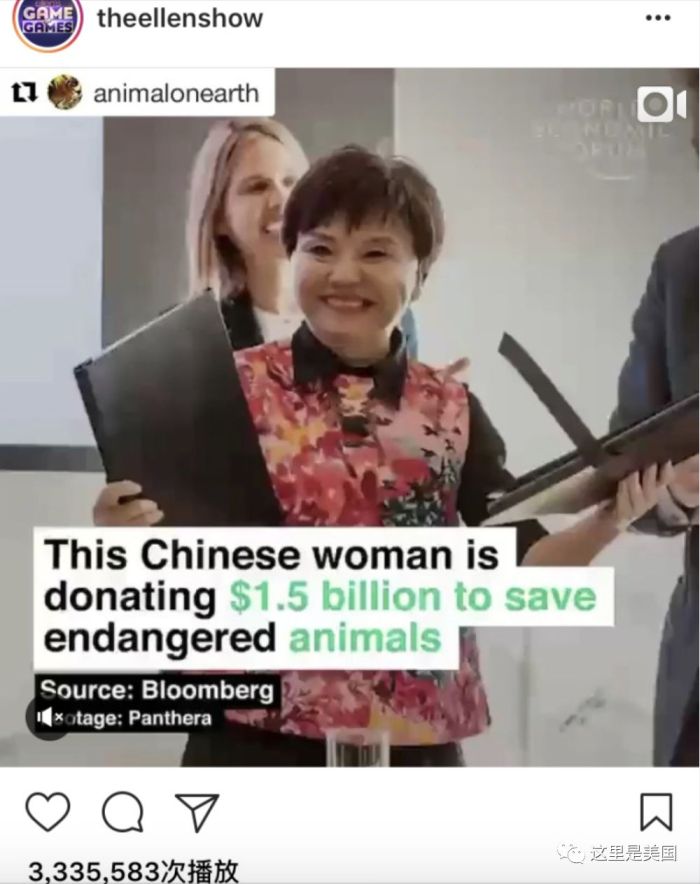
In late January, The Ellen Show published a video on its Instagram about a Chinese woman who has donated $1.5 billion, one-third of her property, to save endangered animals. This is the largest personal donation to a wildlife conservation cause in history!

Photo 1

Who did such a heroic act?

It’s no other than famous Chinese entrepreneur Qiaonv He, founder and chairman of the Beijing Orient Landscape.

A Rock Journey to Success

In January 1966, Qiaonv He was born into a peasant family in rural Zhejiang. Out of the five children in her family, she was the second eldest, and one of the most hardworking.

He as a young girl
He as a young girl; Photo Credit: penetratingview

In 1992, she successfully founded the Beijing Orient Landscape and made her first million through simply selling bonsai. Just as her business was expanding and becoming more prosperous, however, a manager took away all the money from her company, and she was also cheated in her subsequent investment in a Henan mine.

Pursued by creditors and abandoned by employees, she felt like she couldn’t carry on anymore.

However, she didn’t give up and survived.

She restarted everything from scratch with her own hands, and slowly attracted more customers for her bonsai business.

In 2000, just as she was about to relaunch her company, another storm hit her.

Under the pressure of overexpansion and stock market crash, problems began to emerge in the financial chain, and leaders of the company left again with their money. Suddenly, her company was near bankruptcy.

This strong woman stood up again even after this.

In 2006, she and her team finished the landscape decoration for a hotel in Suzhou, which stunned the whole industry and helped her reputation reach an unprecedented height.

After this turning point, she began to undertake orders from most big cities and became an established leader in the landscaping industry.

In November 2009, Beijing Orient Landscape finally became a listed company, and the He couple is now worth more than 10 billion.

Building the World Through Philanthropy

As her landscaping business became more and more prosperous, she also began to worry about environmental pollution.

Inspired by the Rockefeller Foundation, she started a series of philanthropy projects beginning in 2014, donating billions of dollars to environmental protection programs. One of the most earth-shaking moves she made was donating 1.5 billion dollars for wildlife conservation in October 2017.

Donate 1.5 b

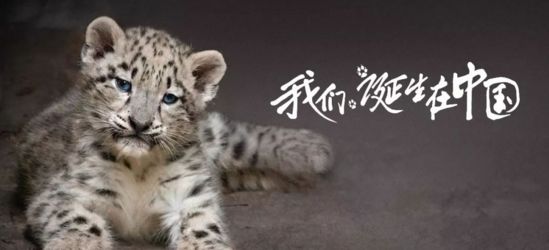
In addition, she donated 20 million dollars for wild feline conservation organizations Panthera, WildCRU and Oxford University’s conservation research unit to start a 10-year program focusing on saving endangered species, including snow leopards, tigers, jaguars, lions, etc.

Born in China

Her donations can make a huge difference in the fate of these endangered wild animals.

Please share this news with those around you! A woman like her who’s humbly and silently changing the world deserves to be recognized!

Info and photos obtained from penetratingview.
https://mp.weixin.qq.com/s/jZlH-442KiC8AXQvF3n_EA

Translated by Riley Peng @Animal Dialogue

Injured snow leopard found and rescued

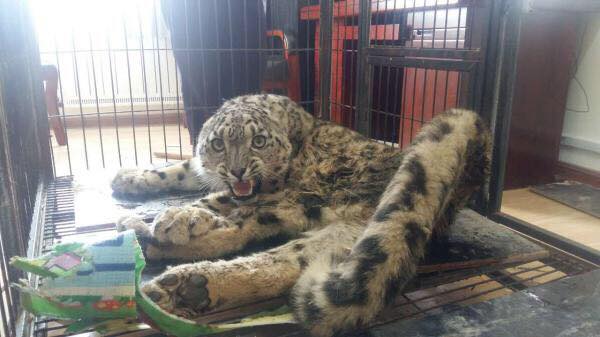
In mid-October, Wang Pu and Duode Jiangba, two shepherds in Yushu, Qinghai’s Tibetan Autonomous Region, spotted a snow leopard on the opposite side of the river.

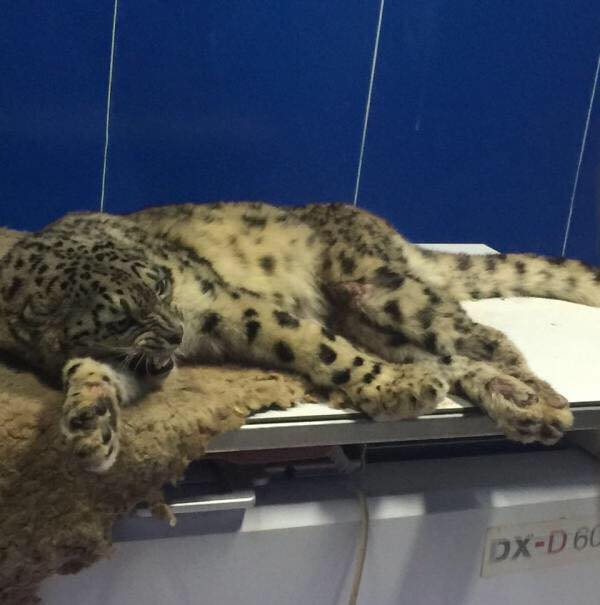
The hindlimbs of this snow leopard were diagnosed as paralyzed. After 24 consecutive days of rescue, it finally managed to stand up again on the morning of November 9th.

The hearts of concerned Chinese netizens throbbed with excitement as they witnessed its gradual recovery, anticipating the day when it can freely run and catch prey again.

Snow leopard2
The injured snow leopard being x-rayed at Nangqian People’s Hospital on October 23rd (Photo Credit: Nangqian Public Security Bureau for Forestry)

Snow leopards—the endangered “kings of snow mountains”

Snow leopards, or “kings of snow mountains,” usually have a grey-whitish exterior, speckled with black rings and black spots. They are often active in regions with altitudes above 3000 meters. They are light, adroit and can be suitably called the “ghosts” traversing cold and high regions.

Only 4500-7500 snow leopards remain alive around the globe, and approximately 2000-2500 of these reside in China, where it became a species under first-class state protection.

Because snow leopards face the threat of extinction, losing even one individual leopard can considerably impact the preservation of the species.

There is hope for this injured snow leopard

When first rescued by volunteers, this rescued leopard could neither walk with its hind leg nor eat or drink anything, which caused it to become very weak. Thankfully, after the strenuous efforts of a medical team—consisting of Beijing Forestry University’s Changxi Xiao, Beijing Zhongnonog Paide Veterinary Hospital’s director Wan Yu, and his assistant—the injured leopard gradually began to regain its vigor.

Snow leopard3
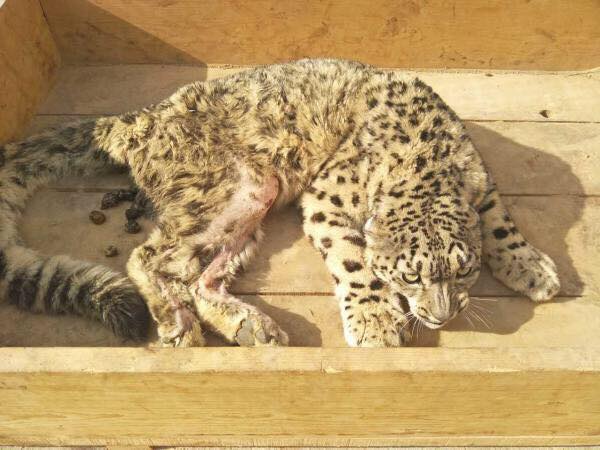
The injured snow leopard sun-bathing in a nesting box (Photo Credit: Xining Wildlife Park)

Now, not only can it stand up and walk, its body weight has also increased from 17.5 kg to 21 kg. Moreover, its wild nature starts to gradually return.

One of the rescuers hopes that one day Xiangnan County can be included within the national protected areas and become a national park, which will make the protection of wild animals much easier.

Xinzhang Qi, another rescuer, wishes to acquire sufficient funds to establish a proper animal hospital with more professional veterinarians. Unfortunately, Xiangnan County currently lacks adequate medical resources for animals.

Just a week ago on November 26th, another injured snow leopard was found in Yushu and sent to Xining for treatment. Another war of rescue has begun.

Written by Riley Peng.

Info and photos obtained from The Paper.

Click here to read the original article from The Paper in Chinese

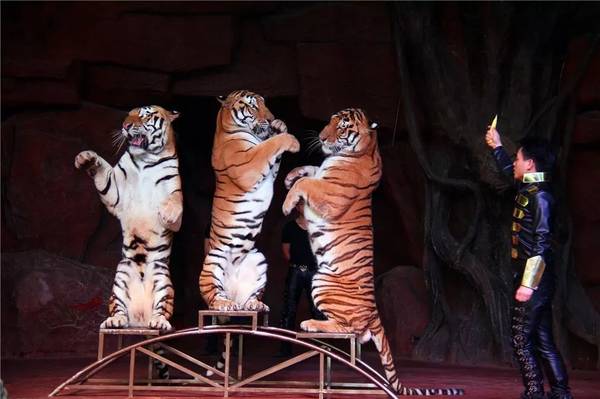
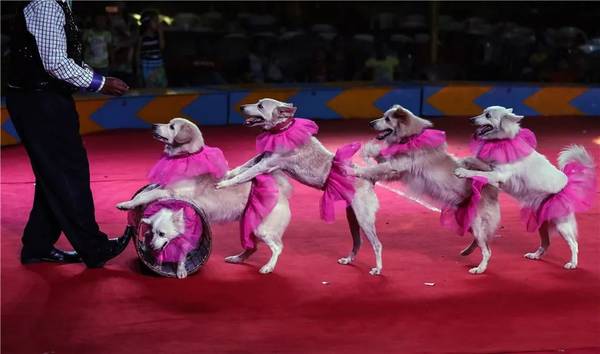
No animal performance at China’s International Circus Festival this year!

There won’t be any animal performance at China’s International Circus Festival this year!

After the bill banning the use of wild animals in circuses in the U.S., we now hear some great news for entertainment animals in China as well!

China is going to say farewell to the use of animals in performance at its 4th International Circus Festival (November 13th- 25th).

“[We] can very certainly and responsibly say that the abolition of animal performance reflects this era’s progress,” says a worker at Zhuhai’s Culture, Sports, and Tourism Bureau on November 2nd.

During this year’s Circus Festival, only human actors will be performing. Going forward, China’s International Circus Festival will strive to take the lead in the direction and developing trend of circus performance, using acrobatics, magic, and other innovative techniques to captivate its audience. It will show that, without animals, circus performance can be just as fun and entertaining.

However, the staff members working at the performance site for the Circus Festival holds that they haven’t received any notifications about canceling items containing animal performance, nor any confirmation for the performance items this year. According to workers at Zhuhai’s Culture, Sports, and Tourism Bureau, this expressed uncertainty probably results from their concerns for advertising.

China’s progress in banning animal performance in circuses can be largely attributed to the effort of animal protection groups such as Save Circus Animals, as well as the general public’s growing awareness of animal protection issues. More and more people begin to support banning animals in circuses; even zoos have begun to cancel animal performances.

We look forward to seeing the absence of animals in China’s International Circus Festival this year!

Written by Riley Peng. Info obtained from The Paper.

Circus pic

The first public promise about welfare for pigs

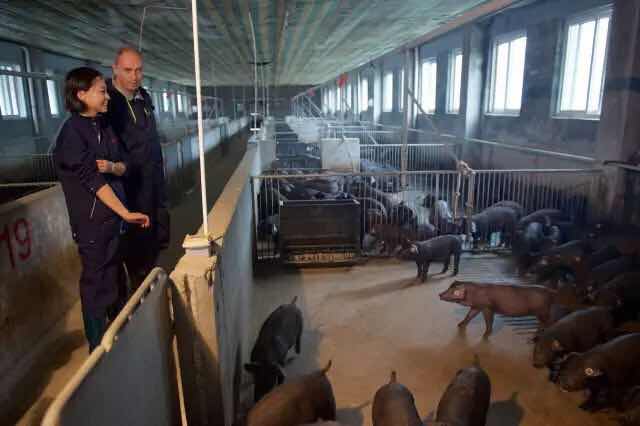
On October 12th, Zhejiang Qinglian Food Co. Ltd formally promised to eliminate its use of crates for sows, expand its welfare breeding bases for sows and finishing pigs, and advocate a welfare-focused breeding model, enhancing the welfare standard for more than 1,000,000 pigs.Summary 1 pic

This is the first Chinese pig-breeding enterprise to make a public promise about welfare farming. This foresees a hot trend for the adoption of a new, more humane breeding model in the entire Chinese pig industry.

This has huge implications, as China is the world’s biggest consumer and producer of pork, farming more than half of the world’s pigs. The traditional intensive farming method also faces various challenges, especially regarding the well-being of live pigs in the breeding, transportation, and slaughtering processes. Moreover, studies have shown a steady increase in domestic consumers’ demand for high-welfare pork products. From this, we can optimistically predict that enhancing animal welfare will be the future dominant trend for the livestock industry.WechatIMG3

Lately, more and more companies, under the encouragement of World Animal Protection, have joined Qinglian in the effort to improve animal welfare. Among these are China’s Da Bei Nong Group, Thailand’s Betagro, and Brazil’s BRF, which have all publicly declared its commitment to adopt welfare breeding and enhance the living conditions of livestock.

Written by Riley Peng.

Info obtained from World Animal Protection.

Please click here if you’re interested in reading more about this (in Chinese): http://www.chinadevelopmentbrief.org.cn/news-20246.html.